
How to Sell Digital Downloads From Your Website: Complete 2025 Guide for Creators


The digital products market is exploding—projected to reach $416 billion by 2030, with profit margins exceeding 85% for most creators. Learning how to sell digital downloads from your website (rather than marketplaces) means keeping 100% of your revenue, owning your customer relationships, and building a sustainable business on your own terms. This comprehensive guide shows both beginners and experienced sellers exactly how to set up, launch, and scale a profitable digital product store in 2025.
The decision to sell on your own website versus marketplaces like Etsy or Gumroad fundamentally changes your business trajectory. While marketplaces offer instant traffic, they charge 15-50% commissions, restrict customer data access, and leave you vulnerable to policy changes. By contrast, selling digital products from your own website costs as little as $5-15 monthly, delivers 20-35% higher profit margins long-term, and gives you complete control over branding, pricing, and customer experience. Whether you're creating online courses, ebooks, templates, or software, owning your platform is the single most important decision for building lasting wealth in the creator economy. This guide walks through every technical and strategic consideration, from choosing between WordPress and Shopify to implementing advanced automation that scales your business.
Choosing the right platform to sell digital products: WordPress and beyond

WordPress powers over 40% of all websites and offers decent flexibility when you sell digital products using the Easy Digital Downloads plugin. The platform requires self-hosting (shared hosting starts at $5/month with providers like Bluehost or SiteGround), giving you ownership of your site and customer data. EDD's free core version handles basic file delivery, customer management, and payment processing, with Pro extensions available for software licensing and subscriptions. You'll pay no platform fees beyond standard payment processing rates of 2.9% + $0.30 per transaction through Stripe or PayPal. However, WordPress sites face inherent limitations: plugin conflicts cause frequent breakdowns, customization beyond templates requires developer help, page speed suffers under plugin bloat (hurting SEO and conversions), and you're constrained by what plugins offer rather than what your business needs.
Shopify presents an all-in-one approach: higher ongoing costs ($29-299/month) but fast launch times of 1-3 days. The platform includes hosting, security, 24/7 support, and built-in marketing features like abandoned cart recovery and discount codes. You'll access 8,000+ apps for extended functionality, though premium apps add $50-100 monthly to your costs. Shopify charges a 2% transaction fee if you don't use Shopify Payments, and the platform controls your customer data, limits customization, and can change policies or pricing at any time. You're building your business on rented land.
Squarespace occupies the middle ground with design templates and built-in course hosting for educators. The platform charges $52/month for its Core plan with digital products add-on, plus 3% transaction fees on sales—which means at $100,000 annual revenue, you're paying Squarespace $3,000 yearly just for the privilege of using their platform. The interface is intuitive but rigid, offering minimal customization beyond their predetermined templates.
Custom-built websites deliver superior ROI for serious digital product businesses by eliminating platform fees, providing unlimited customization, and creating competitive advantages impossible on cookie-cutter platforms. Built with modern frameworks like Next.js, React, or Laravel, custom sites integrate Stripe directly via API (no transaction fees beyond processor rates), load 40-60% faster than plugin-heavy WordPress sites (directly improving conversion rates), and implement exactly the features your business needs—advanced licensing systems, custom checkout flows, AI-powered recommendations, sophisticated member areas, or unique business logic that platforms can't support.
The numbers favor custom development at scale: A business processing $10,000 monthly saves $200-300 monthly by avoiding Shopify/Squarespace transaction fees—$2,400-3,600 annually. Over five years, that's $12,000-18,000 in pure savings, more than covering the initial development investment. But the real value transcends cost savings: custom sites convert 15-25% higher than template-based platforms due to optimized checkout flows, faster page speeds, and tailored user experiences. On $100,000 annual revenue, that's $15,000-25,000 in additional profit yearly from conversion improvements alone.
Custom development typically requires 4-8 weeks for a complete digital product store (faster than learning WordPress deeply), with hosting costs of $10-50 monthly on modern platforms like Vercel, DigitalOcean, or AWS. You own every line of code, maintain complete data ownership, and never face platform restrictions or arbitrary policy changes. The site scales infinitely—whether you're processing 10 orders or 10,000 monthly—without performance degradation or plugin conflicts.
When custom development makes strategic sense: You're committed to building a real business (not just testing an idea), your digital products generate or will generate $3,000+ monthly revenue, you need specific features that platforms don't offer (complex licensing, custom checkout logic, membership tiers with unique rules), you want maximum conversion optimization without plugin limitations, or you're building a SaaS product requiring sophisticated user management and recurring billing.
When platforms suffice: You're validating a product idea with under $1,000 monthly revenue, you need to launch in 1-3 days, you have zero budget for upfront investment, or your products are extremely simple with no custom requirements. Platforms work as stepping stones—many successful creators start on WordPress or Shopify, then migrate to custom solutions once they've proven the business model and grown to $5,000-10,000 monthly revenue.
Platform Cost Comparison & ROI Analysis
| Factor | WordPress + EDD | Shopify | Squarespace | Custom Built Website |
|---|---|---|---|---|
| Monthly Subscription | $5-15 (hosting) | $29-299 | $52 (Core + Digital Products) | $10-50 (hosting only) |
| Setup Time | 1-2 weeks | 1-3 days | 3-5 days | 4-8 weeks (professional development) |
| Initial Investment | $0-100 | $0 | $0 | $5,000-15,000 |
| Payment Processing Fee | 2.9% + $0.30 | 2.9% + $0.30 | 2.9% + $0.30 | 2.9% + $0.30 |
| Platform Transaction Fee | 0% | 2% (adds $200/mo at $10K revenue) | 3% (adds $300/mo at $10K revenue) | 0% - Maximum profit retention |
| Page Load Speed | Medium (plugin-dependent) | Medium | Medium | Excellent (40-60% faster) |
| Conversion Rate Potential | 2-3% (template limitations) | 2.5-3.5% | 2-3% | 3.5-5%+ (optimized for your business) |
| Customization Limits | Plugin-dependent | App-dependent | Highly limited | Unlimited - build anything |
| Platform Risk | Plugin conflicts, WordPress vulnerabilities | Platform policy changes, fee increases | Limited features, high transaction fees | Zero - you own everything |
| Year-One Total Cost | ~$180 | ~$996 | ~$624 + 3% transaction fees | $5,120-15,600 |
| 5-Year Total Cost at $10K/mo revenue | ~$900 + plugin costs | ~$15,480 (with transaction fees) | ~$21,120 (with transaction fees) | $5,600-18,000 (break-even Year 2-3) |
| Best For | Testing ideas, tight budgets | Quick launches, simple products | Course creators, educators | Serious businesses, scalable growth, maximum profit |
| ROI at $100K annual revenue | Baseline | -$2,400/yr (transaction fees) | -$3,000/yr (transaction fees) | +$5,400-8,000/yr (savings + conversion lift) |
Real-World Cost Example: $10,000 Monthly Revenue
WordPress: $15 hosting + $0 platform fees = $15/month (but slower speed = lower conversions)
Shopify: $79 plan + $200 transaction fees (2% of $10K) = $279/month
Squarespace: $52 plan + $300 transaction fees (3% of $10K) = $352/month
Custom Built: $30 hosting + $0 platform fees = $30/month (plus 15-25% higher conversions)
Annual savings with custom development: $2,988-3,864 compared to platforms, plus $15,000-25,000 in additional revenue from improved conversion rates.
Key Takeaway: Platforms make sense for absolute beginners testing ideas under $1,000/month. But once you've validated your digital product business and generate consistent revenue, custom development delivers 300-500% ROI within 24 months through eliminated platform fees, superior performance, and conversion optimization impossible on template-based platforms. You're not buying a website—you're investing in a revenue-generating asset that compounds value over time.
Ready to build a custom digital product website optimized for maximum conversions and profit? Contact us to discuss your project and discover how a tailored solution can transform your digital product business.
Setting up your digital product store for maximum profit
Technical implementation determines whether your store operates smoothly or frustrates customers and loses sales. The three critical components—payment processing, automated delivery, and file security—require careful configuration to maximize conversion rates while protecting your intellectual property.

Automated delivery systems eliminate manual fulfillment while protecting your files from unauthorized distribution. WordPress EDD automatically generates time-limited download links (typically 24-48 hour expiration) sent via email immediately after purchase, with IP restrictions and download attempt limits (5 downloads is standard) preventing abuse. Files should be stored outside your web root directory with randomized names and .htaccess protection, creating URLs that expire and can't be shared effectively. For large files exceeding 2GB, integrate Amazon S3 or Dropbox storage to handle delivery without overwhelming your hosting bandwidth. Shopify's free Digital Downloads app handles files under 5GB with similar automatic delivery, while SendOwl adds advanced features like PDF stamping and license key generation.
Security measures appropriate to your product value prevent piracy without creating friction for legitimate customers. For standard digital products under $100, basic protections suffice: expiring download URLs, attempt limits, and email watermarking on PDFs using services like Locklizard. High-value products over $500 justify investing in Digital Rights Management (DRM) through providers like VdoCipher ($500+/month) or EZDRM, which encrypt video content and require license validation before playback. These systems prevent screen recording and unauthorized sharing but add complexity and cost. Software products benefit from license key systems like EDD Software Licensing, which ties updates to active licenses and limits installations per purchase. Online courses often forgo downloadable files entirely, using streaming video with login-required member areas and session timeouts to maintain control.
The SSL certificate (HTTPS) is non-negotiable for any store handling payments—required by payment processors, expected by customers, and prioritized by Google for search rankings. Modern hosting providers include free SSL certificates through Let's Encrypt with automatic renewal, eliminating this as a separate cost. Configure your site to redirect all traffic from HTTP to HTTPS and verify the padlock icon appears in browsers before launching.
Testing the complete purchase flow before launch catches issues that kill conversions. Purchase your own product using different email addresses, devices, and payment methods. Verify that download links arrive within 60 seconds, work on mobile devices, and contain the correct files. Check that confirmation emails render properly in Gmail, Outlook, and Apple Mail. This 30-minute testing process prevents the devastating experience of customers paying but not receiving their purchases—a problem that generates refund requests, negative reviews, and payment processor scrutiny.
Proven marketing strategies to sell digital downloads from your website
Technical excellence means nothing without traffic. The digital products market in 2025 rewards businesses that master the trifecta of SEO, email marketing, and strategic content creation—organic channels delivering $36-42 return for every marketing dollar spent versus the $10-70 customer acquisition costs of paid advertising.

Search engine optimization drives the lowest-cost, highest-quality traffic to your store. Start by creating comprehensive blog content targeting informational keywords related to your product niche—if you're selling social media templates, write guides like "How to Create Instagram Reels That Go Viral" or "Pinterest Marketing Strategy for 2025." These articles rank for long-tail keywords (4+ words) with lower competition, attracting readers who naturally convert to customers when they discover your related products. WordPress gives you inherent SEO advantages with clean code, fast loading times, and plugins like AIOSEO that provide page analysis and optimization recommendations. Focus on search intent—commercial keywords like "best digital planner app" or "Lightroom presets comparison" signal buyer readiness and convert at 3-5% versus 1-2% for purely informational searches.
Product pages themselves require optimization beyond basic setup. Place your primary keyword in the H1 title, first 100 words of description, image alt text, and URL slug. Write 1,000+ word descriptions that explain not just features but specific problems solved and transformations delivered—customers searching "budgeting spreadsheet template" want to know whether it handles debt payoff, savings goals, and expense categorization, not just that it's "comprehensive and easy to use." Include FAQ sections answering common questions, adding semantic relevance for voice search and featured snippets. The average e-commerce conversion rate hovers around 2.5-3%, but optimized product pages achieve 5-8% by addressing every potential objection and question.
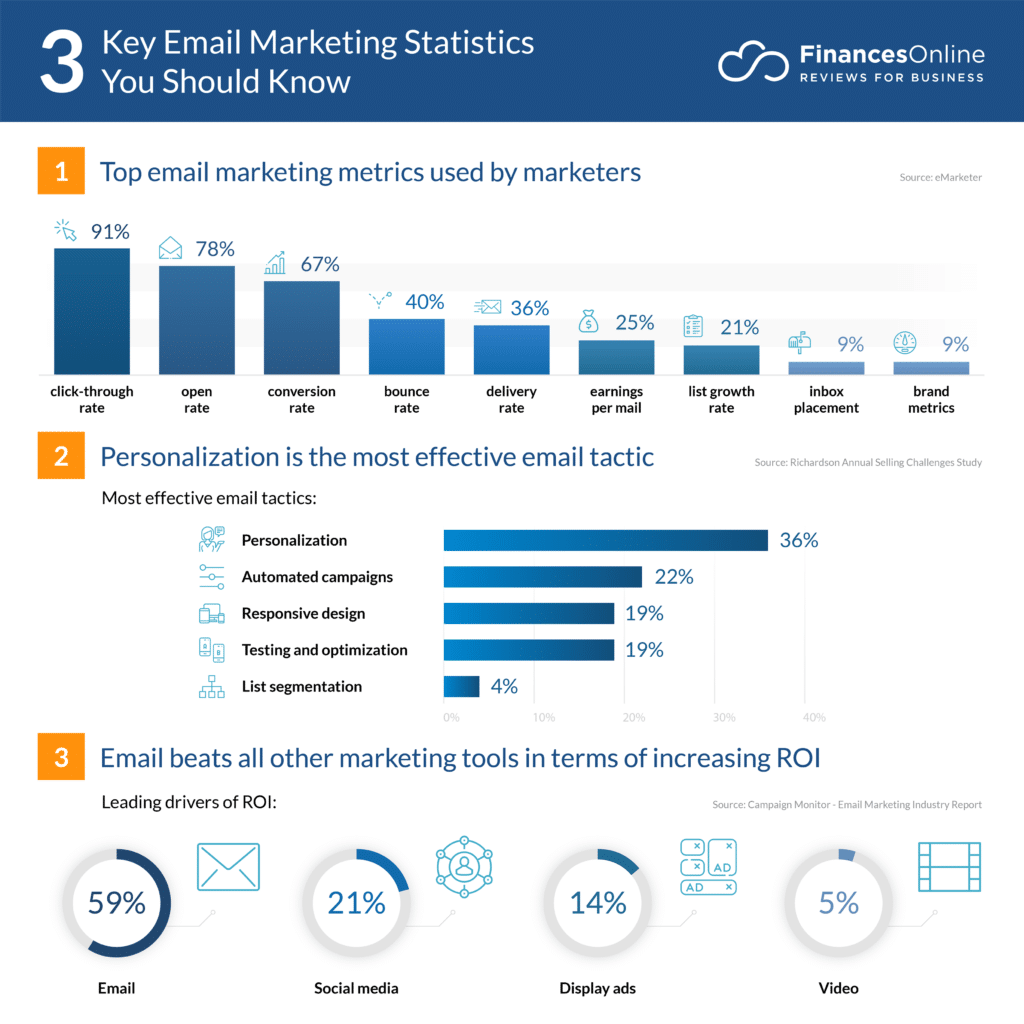
Email marketing delivers the highest ROI of any marketing channel and should begin on day one of your business. Install opt-in forms offering lead magnets—free mini-versions of your paid products, templates, checklists, or guides that solve immediate problems. A course creator might offer a free video training, while a software developer provides a trial version or free tool. This grows your list at 2-5% of website traffic. Build automated email sequences that nurture subscribers: a welcome series introducing your story and philosophy, educational emails providing value without selling, and strategic promotional emails launching products or announcing sales. The data shows email converts at 10.3% average rates—dramatically higher than the 1-2% conversion from cold traffic—because subscribers have self-selected interest and received value before being asked to buy.
Segment your email list based on purchase behavior and interests. Customers who bought your beginner ebook shouldn't receive the same messages as those who purchased your advanced course. Use tags in ConvertKit or segments in Mailchimp to personalize messaging—personalized subject lines alone increase open rates by 26%. Send 2-4 emails monthly to maintain engagement without triggering unsubscribes, and use transactional emails (order confirmations, download links) to deliver 8x higher engagement than marketing emails by including soft upsells for complementary products.
Content marketing through consistent publishing establishes authority and captures search traffic across hundreds of long-tail keywords. Successful digital product sellers publish 2-4 blog posts monthly, create YouTube tutorials demonstrating expertise, and share behind-the-scenes content on Instagram or TikTok that builds connection with potential customers. This approach takes 6-12 months to gain momentum but compounds exponentially—Nathan Barry built a $30 million company (ConvertKit) starting with ebooks marketed entirely through his blog and email list. The key is consistency over intensity; two high-quality posts monthly beats eight rushed pieces.
Social media works best as a distribution channel for your content rather than primary platform. Post blog articles to LinkedIn for professional topics, share templates and designs on Pinterest for visual products, and create short-form video content on TikTok or Instagram Reels explaining concepts related to your products. The goal is driving traffic to your owned website where you capture emails, not building audiences on rented platforms. Social commerce drove 35% of customer acquisitions in 2024, but smart creators use it to grow their email lists, not replace their websites.
Common mistakes and how to avoid them when you create website to sell digital products
Avoiding common pitfalls accelerates success more than discovering secret strategies. The data reveals that 90% of new digital product businesses fail within their first years, but most failures result from predictable, preventable mistakes around pricing, promotion, and technical implementation.

Pricing errors destroy profitability before businesses gain traction. The most common mistake is pricing too low out of fear that "nobody will buy" at higher prices—beginners charge $10-20 for products that deliver $100-500 in value, leaving massive money on the table. The research shows first-time course creators average $137 for their initial offering, but optimal pricing ranges from $197-497 for short courses based on the value delivered, not hours of content. Digital products have near-zero marginal costs (95%+ profit margins), making each sale nearly pure profit after the first few cover creation time. Price based on transformation and results: a $47 budgeting template that helps customers save $500 monthly is underpriced by 90%. Test pricing with small increases—most digital products see minimal demand drop from $97 to $147, nearly doubling revenue per customer.
The opposite mistake happens at scale: not raising prices as authority grows. The Lightroom preset that sold for $25 as an unknown creator should command $75-150 once you've built a portfolio of customer results and social proof. Dynamic pricing works brilliantly for digital products—early adopters get discounted access (50% off for first 100 customers) while later buyers pay full price. This creates urgency without devaluing your work.
Promotional failures kill more businesses than bad products. The critical error is not promoting consistently and across multiple channels—creators launch a product, promote for 2-3 weeks, then stop marketing and wonder why sales dried up. Digital products don't sell themselves; they require ongoing promotion through email (weekly to your list), social media (daily organic content), SEO content (2-4 posts monthly), and strategic partnerships. Set a rule: spend equal time creating and promoting. If you invested 40 hours creating a course, invest 40 hours marketing it before moving to the next project.
Not building an email list from day one represents the costliest oversight. Creators focus on product creation while ignoring audience building, then launch to silence. Start collecting emails 3-6 months before launch using a simple landing page and lead magnet. A 500-person email list generates more revenue than 10,000 social media followers because you own direct access and subscribers convert at 10x higher rates. The mantra: subscribers are future customers; social followers are nice-to-haves.
Technical mistakes create friction that bleeds customers at checkout. Failing to mobile-optimize your store loses 63% of potential traffic since mobile accounts for the majority of browsing, even though desktop converts higher at 4.8% versus 2.9% for mobile. Test your entire purchase process on an iPhone and Android device—if checkout requires pinch-zooming or fighting with forms, you're losing 30-50% of mobile customers. Similarly, not offering multiple payment options (Stripe + PayPal at minimum) abandons 15-25% of customers who lack credit cards or prefer PayPal's buyer protection.
Platform mistakes compound over time. Selling exclusively on marketplaces without building your own site creates a business you don't control—Etsy can suspend your account, Amazon can change commission structures, and you never own the customer relationship for repeat sales. The hybrid approach succeeds: use marketplaces for initial traction and discovery, but direct all customers to your email list and website for future purchases where you keep 100% of revenue instead of 50-70% after marketplace fees.
Not tracking analytics means flying blind. Install Google Analytics from day one and monitor these critical metrics weekly: conversion rate (visitors to customers), traffic sources (where buyers come from), cart abandonment rate (typically 75% industry-wide), and customer acquisition cost per channel. When you discover that Instagram drives 1,000 visitors but zero sales while your blog attracts 200 visitors who convert at 5%, you know where to focus effort. Successful sellers track email open rates (target 22%+), click-through rates (2.6%+), and lifetime value per customer—metrics that guide every business decision.
Scaling from first sale to six figures on your digital product website
The strategies that generate your first sales don't scale to six figures without intentional evolution. Advanced sellers automate ruthlessly, build product funnels, and optimize based on data rather than instinct—separating hobbyists earning $500 monthly from full-time creators generating $10,000-50,000 monthly from the same-size audiences.
Automation transforms your business from trading time for money into a true passive income stream. Zapier connects your store to 8,000+ apps without coding, triggering actions automatically: new purchase → add customer to specific email sequence in ConvertKit → grant access to member area → notify your team in Slack → create customer record in HubSpot CRM. These "Zaps" cost $19-49 monthly depending on volume but eliminate hours of daily manual work. More sophisticated automation includes abandoned cart sequences (recover 10-20% of abandoned purchases), post-purchase upsell emails (increase average order value by 25-40%), and customer segmentation based on purchase history for targeted cross-sells.
Email automation delivers the highest leverage. Create sequences that run perpetually: a welcome series for new subscribers (5-7 emails over two weeks introducing your philosophy and best content), evergreen sales sequences promoting your flagship product with email and scarcity, and re-engagement campaigns for inactive subscribers. Top performers build 30-50 automated emails that nurture, educate, and sell without manual sending—powering 24/7 revenue generation.
Product funnels multiply revenue per customer through strategic offerings at different price points. The ascension model works universally: free lead magnet → $27 tripwire product → $97-197 core offer → $497-997 premium product → $2,997+ flagship course or coaching. Each product naturally leads to the next, with increasing price points delivering increasing transformation. A design template seller might offer: free Canva template → $29 template bundle → $97 complete brand kit → $497 course teaching template creation → $2,997 licensing program for selling templates as your own business.

Bundling increases average order value by 25-40% compared to individual sales. Group complementary products (social media templates + caption guide + hashtag research spreadsheet) at 20-30% discount versus buying separately. The data shows customers perceive bundles as higher value and buy more readily than individual products at the same total price.
Subscription models provide the most predictable, scalable revenue. Convert one-time products to recurring income through membership tiers: $29/month for ongoing template releases, $97/month for templates plus monthly coaching calls, $297/month for VIP access with one-on-one support. The subscription economy grew 435% over the past decade because customers prefer spreading costs while creators love predictable monthly revenue. A business with 300 members paying $47/month generates $14,100 in stable, recurring revenue—far easier to forecast and grow than one-time sales.
Data-driven optimization happens through systematic testing. Run A/B tests on product pricing (does $97 or $147 generate more total revenue?), sales page headlines (test 3-5 versions using Google Optimize), and email subject lines (test everything in your email platform). Track these KPIs religiously: conversion rate (target 3-5%), customer acquisition cost per channel (email should be lowest at $10, paid ads $50-70), lifetime value per customer (target 3:1 LTV:CAC ratio minimum), and churn rate for subscriptions (under 3% is healthy).
Strategic partnerships accelerate growth beyond what solo promotion achieves. Identify creators serving the same audience with complementary (not competing) products—a photographer selling Lightroom presets partners with a posing guide creator for bundle promotions. Joint ventures where you promote each other's products to your lists tap new audiences with built-in trust, typically converting at 3-5% versus <1% for cold traffic. Affiliate programs take this further by recruiting 10-50 partners to promote your products for 20-40% commission. A $197 product with 30 active affiliates each driving 5 sales monthly generates 150 sales ($29,550 gross, $23,640 after commissions)—revenue impossible through solo marketing.
Platform optimization extracts more revenue from existing traffic. Implement exit-intent popups offering 10% discounts to capture abandoning visitors. Add live chat support through tools like Drift or Intercom—visitors who engage with chat convert at 3x higher rates. Create urgency with honest scarcity: "Launch week pricing ends Friday" or "Only 50 copies available at this price." The conversion rate increases of 15-40% from these optimizations compound with traffic growth to dramatically impact revenue.
Take control of your digital product business today
Building a profitable digital product business on your own website delivers unmatched freedom—the freedom to keep 100% of your revenue, own your customer relationships, and scale without platform dependencies. The $416 billion opportunity is real, but the difference between creators who launch successfully in weeks versus those still "figuring it out" months later comes down to professional implementation. Chernow Unlimited builds high-converting digital product websites—both custom solutions and expertly optimized Shopify/WordPress/SquareSpace sites—so you can focus on creating products and marketing instead of wrestling with technical setup for 40-80 hours. Every week delayed costs you thousands in lost revenue while your competitors go live and start selling. Ready to launch in 2-3 weeks instead of 2-3 months? Schedule your free consultation with Chernow Unlimited today and let's transform your digital product idea into a revenue-generating website.